Most people who work with drones never open one up. They unbox it, calibrate it, and fly it. What happens between the stick on the remote and the spin of a propeller stays a black box.
We wanted students to open that box.
In 2025, Zurisoft partnered with Drobotics Systems to run a hands-on drone class. The brief was simple: teach students how a drone actually functions, have them build one from scratch, and then teach them to fly it. Not from a kit. Not from a pre-built flight controller. From components, code, and a 3D printer.
Why teach it from scratch
The drone market is dominated by DJI. That is not a criticism. DJI makes excellent hardware. But a sealed, pre-built drone teaches you how to fly, not how flight works. The firmware cannot be modified and the hardware is expensive to replace, which puts real understanding out of reach for most learners.
Building from open, affordable components changes that. When students assemble the hardware and write the code themselves, every part of the system becomes something they can explain, fix, and improve.
What the students learned
The class moved through the full stack, one layer at a time.
- How a drone functions: thrust, lift, and the roll, pitch, and yaw that keep a multirotor stable in the air.
- How to build one from scratch: frame, motors, ESCs, power distribution, and wiring it all together.
- How to make a flight controller with an ESP32: reading the sensors, running the control loop, and driving the motors from their own code.
- How to make the remote: building the transmitter that sends their commands to the drone.
- How to fly it: calibration, pre-flight checks, and getting their own drone safely into the air.
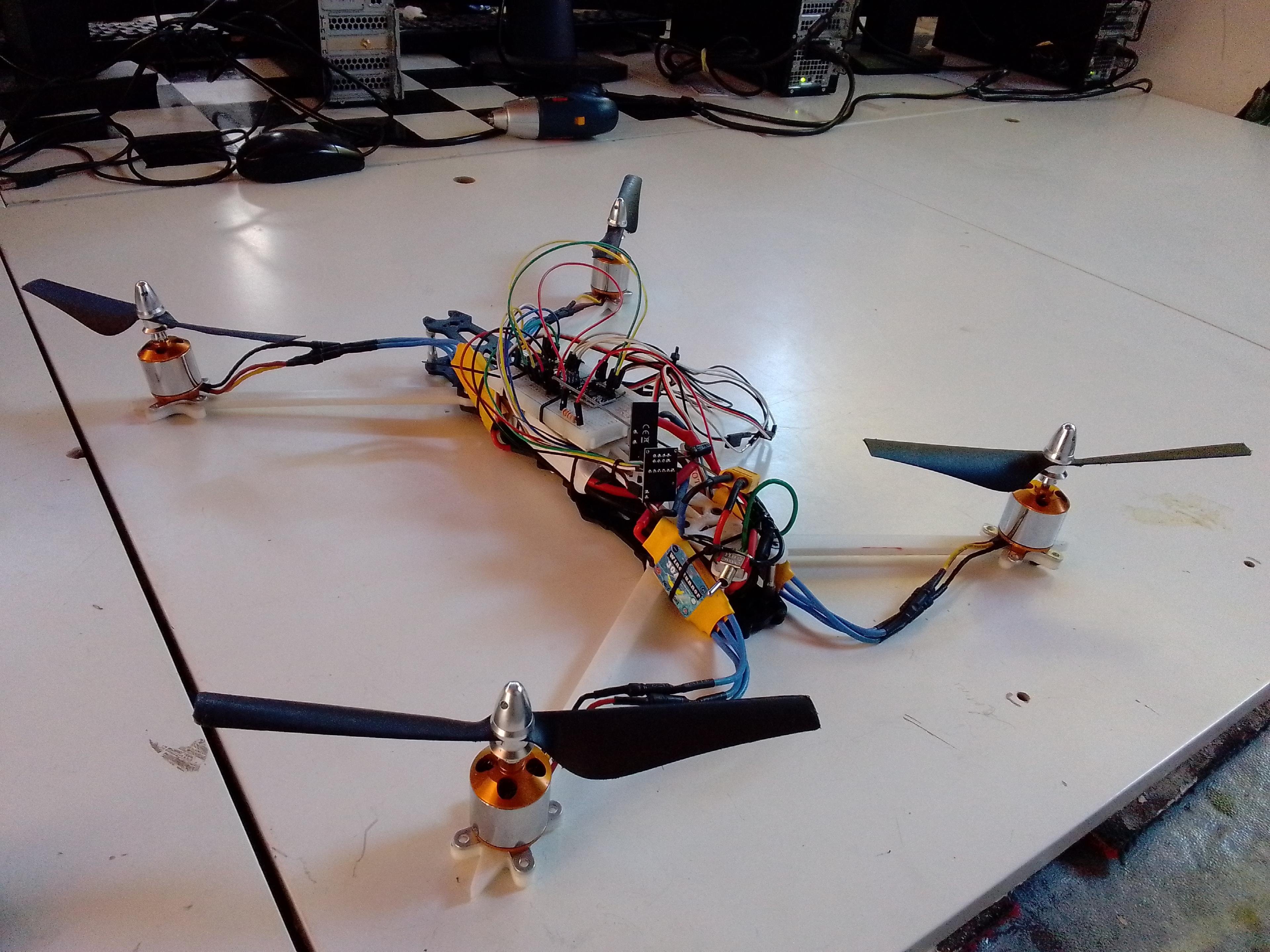
Building the flight controller and the remote
The heart of the class was the flight controller. Instead of flashing an existing firmware stack, students built their flight controller on an ESP32 and wrote the code that keeps the drone level and responsive. Understanding the control loop by writing it, not by importing it, was the point.
They then built the other half of the system: the remote. Making their own controller meant understanding how commands leave the pilot's hands, travel to the drone, and get turned into motor output by the flight controller they had just written.
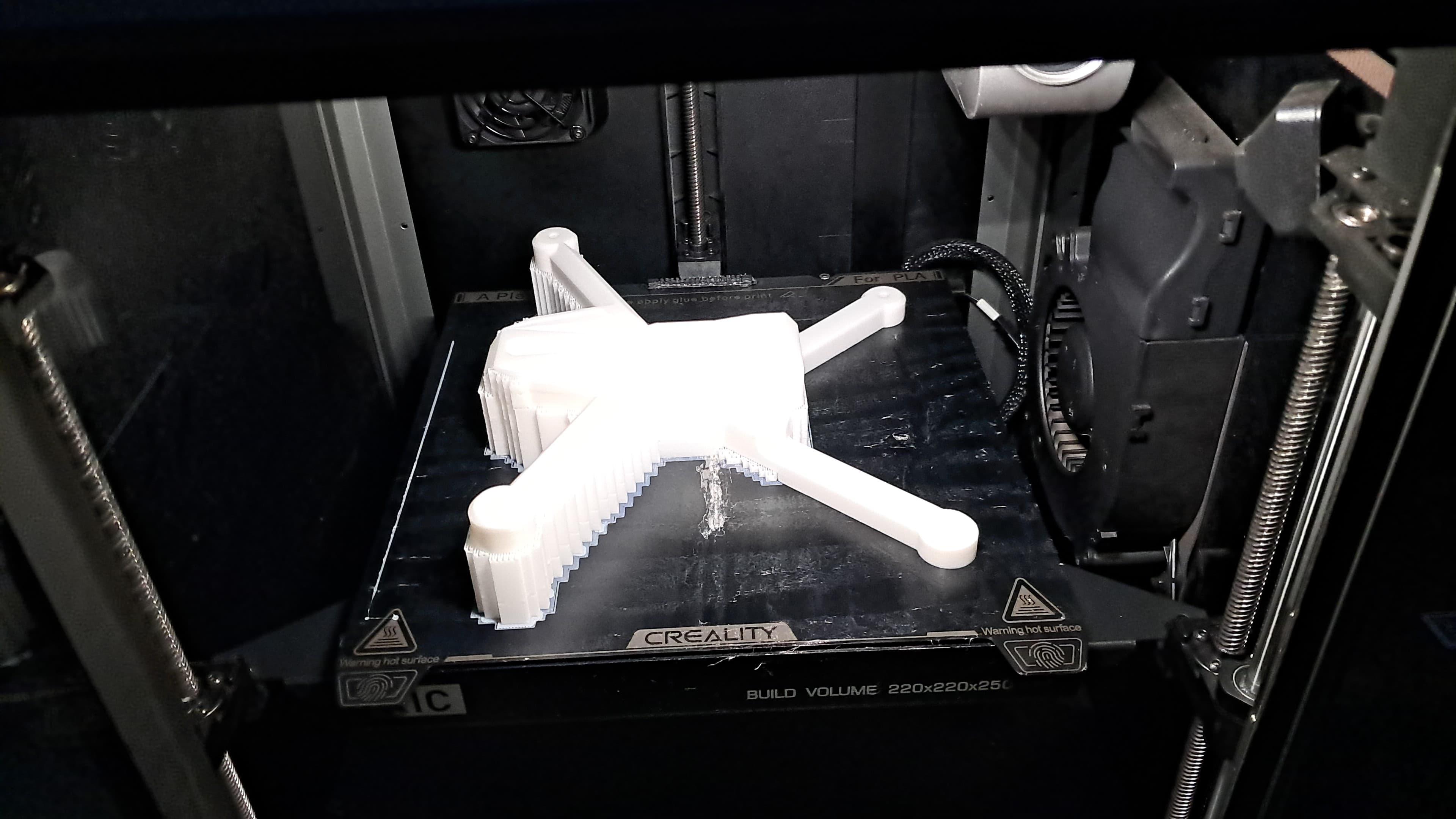
Wiring, receiver integration, and calibration were treated as real engineering problems, not afterthoughts. Each stage exposed decisions that a pre-built drone hides from you. That exposure is what turns a flyer into a builder.
From the bench to the sky
The final step was flying. Students learned to fly the drones they had built, running on a flight controller and remote they had made themselves. When something did not behave as expected, they knew where to look, because they had built every layer.
What this informs
This class is the practical foundation behind the drone engineering curriculum Zurisoft continues to develop. Teaching someone to build a drone from scratch requires having done it, and having done it alongside learners shows exactly where they get stuck and what makes it click.
The goal is not to produce drone enthusiasts. It is to produce people who understand the full hardware stack well enough to design a drone for a specific application, build it, and fly it.